

The NYT has an interesting piece on inflation this morning (A Modest Rise Still Amplifies Inflation Fears) which underscores how the events of the mid-to-late 1970s continue to seriously influence monetary policy in the United States:
Much as the 1930’s Depression seared an entire generation of Americans who lived through it, the stagflation of the 1970’s and the acute recession of the early 1980’s indelibly marked an entire generation of economists.
As such, we have reached a point where the Fed’s target for inflation is under 2% per annum.
The piece also includes this nifty chart:
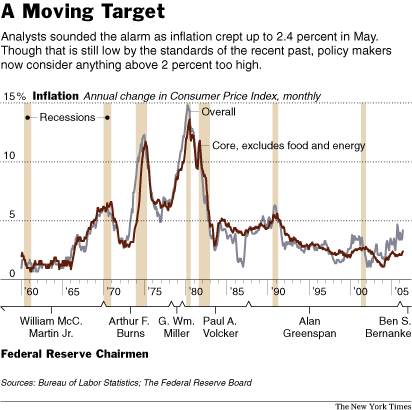
The general upshot of all of this is that we can expect the Fed to raise interest rates. I am insufficiently educated (by a long shot) to make much of an intelligent assessment of all of this. However, one does wonder, given that the basic goal of a rate hike is to slow the economy, if we are not to a point, because of our nightmare memories of the 1970s, too overly cautious about inflation to the point that we engage in policy that harms the economy in other ways. Clearly investors, for example, don’t like the rate hikes.
Less investment can mean less jobs, and so forth. So, is keeping inflation around 2% instead of, say, 3%, worth the commensurate effects in the economy that rate hikes bring?
I don’t know, but it does make me wonder.
Sphere: Related Content
Raising the rates again would be absurd. Each time they do that, people’s credit card payments go up, and the housing bubble deflates some more. Well, not that the second is a bad thing.
They’re going to take it too far, trying to fight inflation. Mark my words.
Comment by Jay — Thursday, June 15, 2026 @ 8:26 am